Hills owners in the Very High zone
Panoramic Hill, Cragmont, the Grizzly Peak corridor — the neighbourhoods the City’s memo is describing. Your letter is the market working as currently designed, and the 75-day plan is written for your parcel first.
The letter reads like a verdict. It is actually a schedule. State law leaves a non-renewed homeowner 75 days to land a replacement policy, and in Berkeley’s hills the document that decides the answer is, more often than not, a roof file: dated photographs, a Class A assembly, a mitigation checklist an insurer is obliged to credit. We build that file against the clock. Here is the running order.
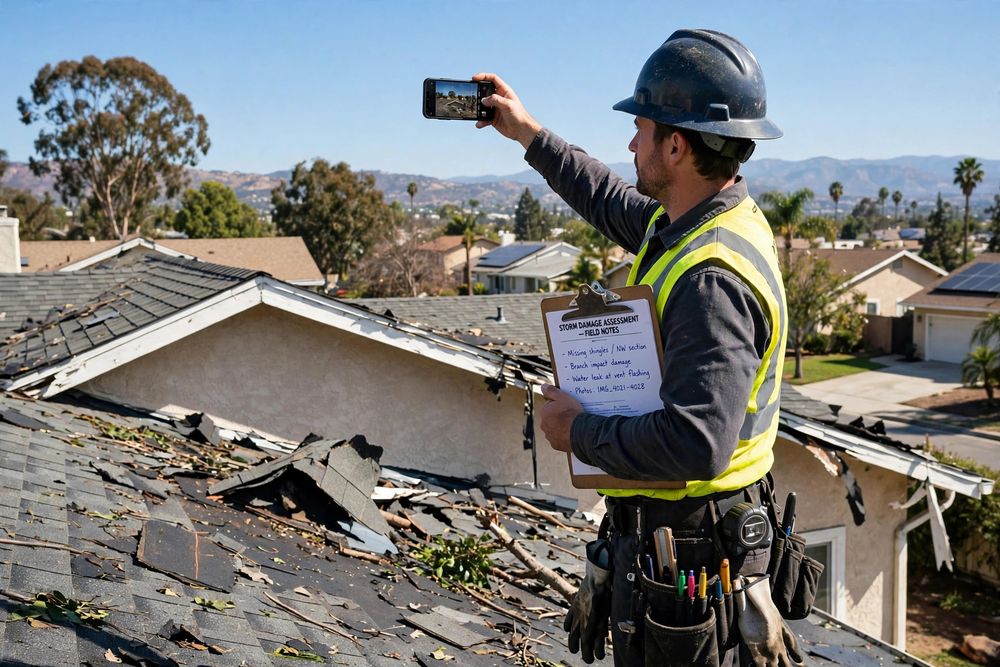
A countdown — and, if you read the City of Berkeley’s own memo, a queue you are standing in with most of your hillside neighbours.
On April 28, 2026, the City’s Disaster and Fire Safety Commission put it in writing: Berkeley faces a serious and ongoing home insurance crisis. Major admitted insurers have paused or stopped writing in the hillside neighbourhoods, and the California FAIR Plan — the insurer of last resort — now underwrites a significant share of hillside risk. Amy Bach of United Policyholders, the consumer advocates quoted throughout Berkeleyside’s insurance reporting, describes the mailbox moment plainly: live anywhere near brush, and the letter has either arrived or is being dreaded.
Why does a roofing company get the call? Because of what the refusal is usually about. California’s Safer from Wildfires rule (10 CCR §2644.9) names the mitigation measures a wildfire-rating insurer must recognise — and the first structure measure on that list is a Class A fire-rated roof. The same rule obliges the insurer to show you your property’s wildfire risk score, explain what would lower it, and hear an appeal. A non-renewal, in other words, comes with a syllabus. The roof is the largest item on it.
That is the entire design of our documentation-first insurance work: treat the letter as a project with a deadline, assemble the evidence an underwriter is set up to read, and hand your broker a file that can be forwarded the day it lands. The rest of this guide is the sequence we run.
Seventy-five days is generous for paperwork and tight for roof work in the rain. The order matters more than the speed:
| Window | The work | Why it comes then |
|---|---|---|
| Days 1–7 | Read the letter; call your broker | The letter names a date and usually a reason. Bach’s practical question — what would change your mind? — turns a refusal into a scope of work. |
| Days 1–14 | Roof inspection and photo file | Every later step hangs off dated photographs of what is actually on the roof today. |
| Days 8–30 | Mitigation scope, checked against the twelve measures | Both sides are reading the same state list. The scope should answer it line by line, not approximately. |
| Days 15–60 | The roof work itself | Repairs, gutter and vent work, or a Class A re-roof — sequenced around the weather if the clock lands in winter. |
| Days 45–70 | The pack goes to your broker | Photographs, assembly evidence, permit records — formatted for the reader who decides, not the reader who paid. |
| Days 60–75 | Policy placed — or the FAIR Plan bridge | If the admitted market still says no, FAIR Plan fire cover plus a DIC wrap keeps the house insured while the file seasons. |
The 75-day window: United Policyholders’ Amy Bach, in Berkeleyside’s insurance reporting. The twelve measures: California Code of Regulations, title 10, §2644.9 (Safer from Wildfires), as summarised in the Lederer Team’s East Bay hills insurance guide.
Increasingly, a photograph. Bach’s much-quoted observation is that insurers once wrote policies on houses with their warts showing; her examples of warts are pine needles sitting on the roof and leaves sitting in the gutter. Those are now the first things an underwriter’s image review finds — which means the cheapest mitigation in this entire guide is a clean roof and clean gutters, photographed with dates on them.
Beyond the photograph sits the score. Under §2644.9 you are entitled to your property’s wildfire risk score and to the list of factors driving it — and a Class A roof, ember-resistant vents, and a cleared five-foot zone each speak to named factors. It starts the way every one of our files starts: an inspection written for the insurer’s desk, with the mitigation checklist filled in against the state’s twelve measures rather than our own say-so.
And the ground is shifting in the homeowner’s favour. The City’s April memo backs SB 1076, under which — from January 1, 2028 — admitted insurers may not refuse to offer or renew cover for properties that meet the state’s wildfire-mitigation standards. Read that twice: documented hardening is on its way to becoming a legal entitlement to be quoted. A roof file assembled now is not a one-season purchase. If you want the shape of the retreat in raw numbers first, the FAIR Plan’s Berkeley ledger lays out all five ZIP codes.
The crisis has an address pattern, and it is the hills:
Panoramic Hill, Cragmont, the Grizzly Peak corridor — the neighbourhoods the City’s memo is describing. Your letter is the market working as currently designed, and the 75-day plan is written for your parcel first.
A non-renewal between listing and closing lands on the disclosure file and the buyer’s lender at once. A dated roof file does not just chase a policy; it steadies the sale.
A rental’s insurance problem is the owner’s problem, and tenants cannot solve it. The same documentation pack serves the policy, the lender, and the next refinance.
The FAIR Plan’s approved average rate rise of 29.1% took effect October 15, 2026 (KQED, via the Lederer guide) — mitigation is now also an argument about price, not only about eligibility.
No — and you should distrust anyone who promises you an underwriter’s decision. What the roof changes is the evidence in front of that underwriter. Under §2644.9 the insurer must credit the listed mitigation measures, must show you the risk score they produced, and must offer a route to appeal it. A Class A roof with a dated photo file is the strongest single entry on that list; it is leverage, not a guarantee, and we will describe it to you in exactly those terms.
The clock runs from the notice, not from your first phone call, so the honest answer is that the plan compresses rather than disappears. The inspection and the photograph file can happen within days; they are what a broker needs to start conversations in parallel with any roof work. And the FAIR Plan exists precisely as the bridge — fire cover of last resort, with a residential limit of $3 million (per the Lederer Team’s guide), while a fuller placement is assembled.
The California FAIR Plan is the state’s insurer of last resort: a fire policy for homes the admitted market will not write. On its own it is narrow — fire is the core of it — so East Bay hills households commonly wrap it with a Difference-in-Conditions policy that restores the missing pieces, liability and water damage among them. The pair, not either policy alone, is the standard hills structure, and each side of it will ask to see your roof documented in its own way.

The numbers behind the letters: five Berkeley ZIP codes of FAIR Plan growth, counted and caveated.
The FAIR Plan Table, ZIP by ZIP →
The other document hills owners are measured against — Berkeley’s own Zone 0 law and its roof-and-gutter list.
EMBER & Zone 0: The Five-Foot Law →
The documentation pack itself: inspection, photographs, Class A evidence and the mitigation checklist, built against your deadline.
Roof Insurance Claim in Berkeley →If a non-renewal is sitting on your counter, the first week belongs to photographs and a plan, not panic. Call us, and we will walk the roof, date the evidence, and lay out your 75 days in writing — while there are still 75 of them.