Berkeley Roof Costs, Fully Attributed
What Act Two costs — the published Berkeley ranges for repairs and replacements, each with its source attached.
Berkeley Roof Costs, Fully Attributed →Berkeley’s rain arrives in a season, not a drizzle — about 26 inches a year, stacked between November and March, some of it in atmospheric-river bursts. That calendar imposes a discipline on honest roofing here: in the rain, we dry you in and stop the damage; in the dry window, we do the permanent work. The University of California runs its own roofs on exactly that split. Here is how the two acts work, and what each one can and cannot promise.
Roughly October through March, peaking in December and January. NOAA’s 1991–2020 normals for Berkeley total about 26 inches a year — and almost none of it falls in summer.
The monthly shape matters more than the annual total. December averages 5.32 inches, February 5.12, January 4.84 — while July averages one-hundredth of an inch. Berkeley roofs are not tested evenly across the year; they are examined, hard, for five months, and then given seven months to be repaired. Layer on the delivery mechanism — atmospheric rivers that can park over the East Bay — and the extremes sharpen: Berkeley’s wettest month on record dropped 14.49 inches (February 1998), and its wettest single day, 6.98 inches, fell on January 4, 1982. A roof detail that survives an average December can still fail the exceptional January day. Both numbers belong in your head when a roofer says “it should hold.”
Act One happens in the rain and Act Two in the dry — and Berkeley’s biggest landlord runs its roofs on the same split: UC Berkeley Facilities describes quick response to roof leaks from mid-October through March, with permanent repairs and replacements done April through September.
Act One — find it and dry it in
In the rain, the job is diagnosis plus containment: the leak’s entry point traced (rarely where the ceiling stains), a tide-over repair made, and the interior protected. Berkeley parents describing a winter roofer they were glad to have hired use exactly this shape — the repair that held the house until the rain stopped.
Between the acts — document and quote
Once the roof is dry and safe to read properly, the permanent scope is written: the failed detail, the surrounding field, and whether the honest answer is a repair or the end of the roof’s life. This is also when the full quote belongs — scoped from a dry roof, not guessed from a ladder in a storm.
Act Two — the permanent work
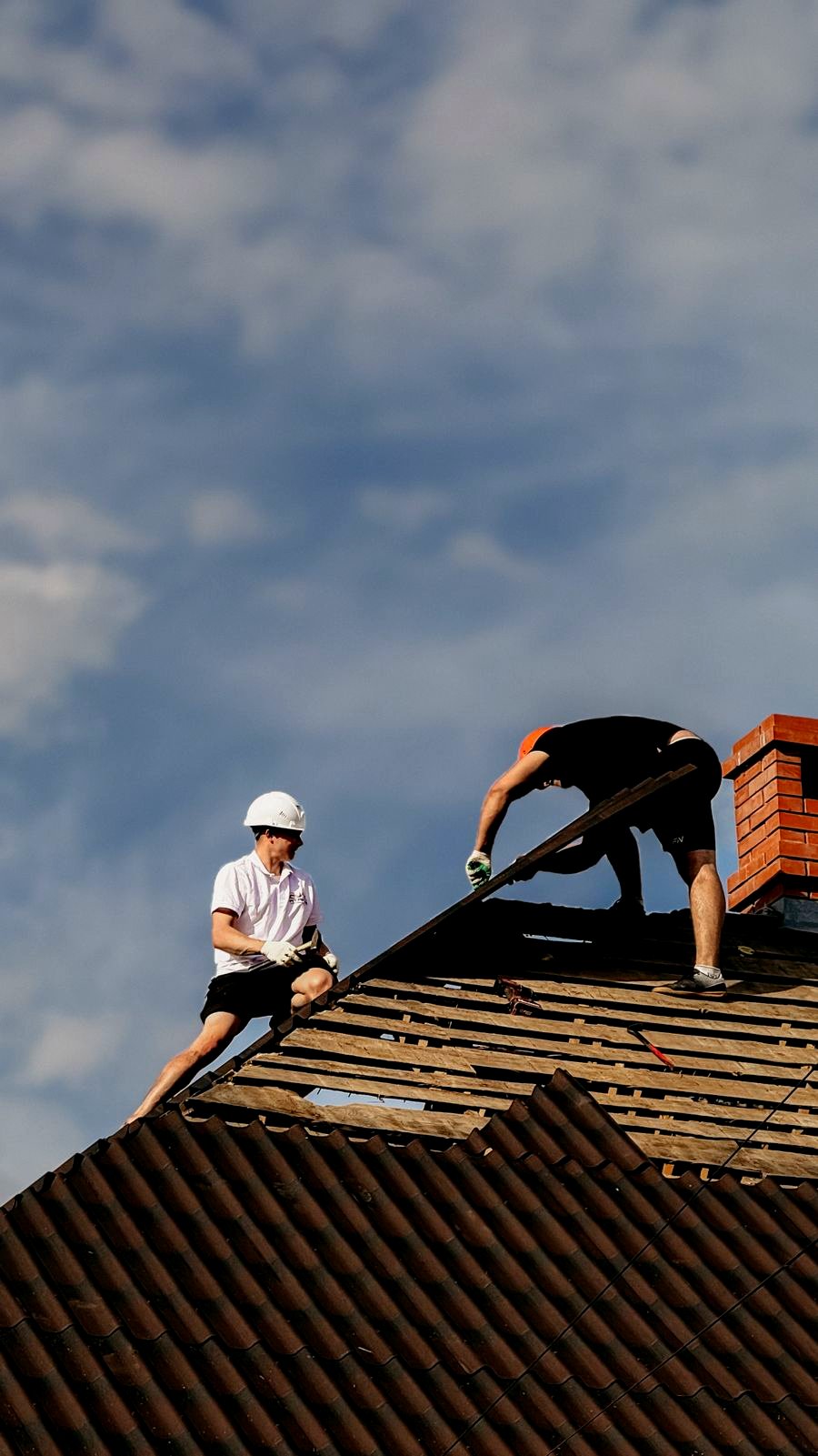
April through September, the same crew returns and does the durable version: flashing rebuilt, field renewed, details finished to standard rather than to weather. A tide-over that skips Act Two is not a repair with a sequel; it is a countdown to the next December.
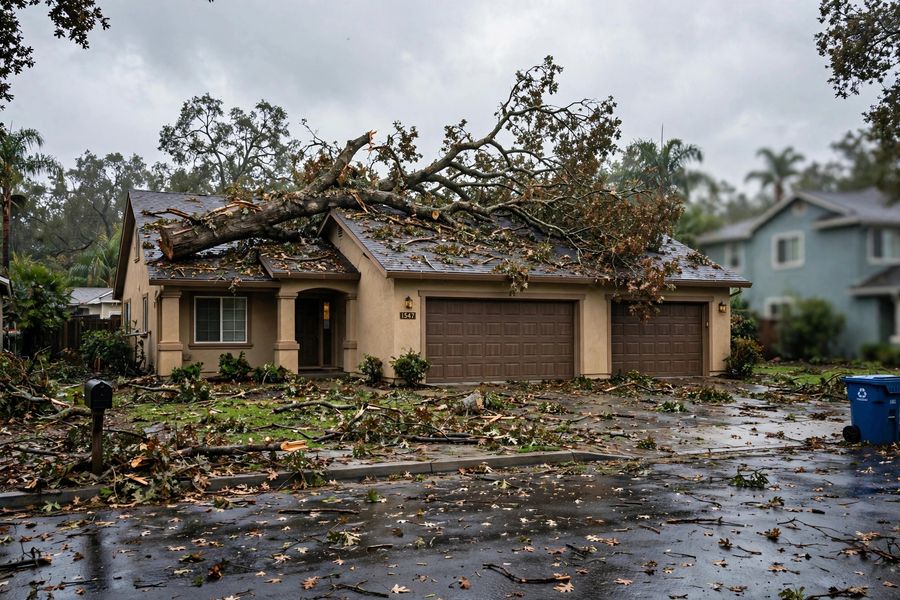
Berkeley’s entries split by terrain. Up the hill, the failures are wind work: Diablo-wind uplift on exposed ridge lots, wind-driven rain pushed sideways into flashing that sheds falling water perfectly well, and limb strikes after saturated soil lets a canopy tree lean. In the canopy streets — Thousand Oaks under its oaks — the quieter failure is the debris-loaded valley, which dams a storm’s worth of water behind a mat of leaves until it finds the fastener holes. Down in the flats, the enemy is standing water: West Berkeley’s low-slope roofs — torch-down, EPDM and TPO over Victorians, warehouses and lofts — fail at ponding and tired seams, and a shallow roof can look sound all summer and leak in the first real November week. Shaded north slopes add moss, which holds moisture against the shingles and lifts their edges for the wind to finish.
Which is why our storm-season work is split the same way as our thinking: wind and impact damage up the hill, detail failures and ponding down in the flats — and if you are pricing what the permanent act will cost, the figures live in the sourced cost guide.
The dry-in can; the permanent repair usually cannot, and any roofer who tells you otherwise is selling you December work at January standards. Adhesives, membranes, and flashing details need dry substrate and working weather to cure and seal as designed. What a good storm-season roofer does is narrower and more valuable: find the true entry point, stop the water, protect the interior, and put the permanent scope in writing for the dry window. UC Berkeley’s facilities team publishes the same two-season policy for the campus’s own roofs.
As early in the dry window as you can — which in practice means booking in late winter, while the tide-over is still holding. Berkeley roofers’ April and May calendars fill with exactly the work December discovered, and the homeowner who waited for sunshine to make the call queues behind everyone who did not. If your roof needed two or more tide-overs in one season, raise the replacement question at the same appointment; repeated dry-ins are the roof telling you its remaining life in instalments.
No — a tarp is a pause button. It sheds water off a damaged area and buys the interior time, but it fastens through the very surface you are trying to save, degrades in sun and wind within a season, and fixes nothing underneath itself. Used deliberately — after a limb strike, while an insurance file or a dry window is arranged — it is the right tool. Presented as the repair itself, it is how a $600 detail becomes a rotted deck. Berkeley’s season gives you the dry months to convert the pause into the fix.
What Act Two costs — the published Berkeley ranges for repairs and replacements, each with its source attached.
Berkeley Roof Costs, Fully Attributed →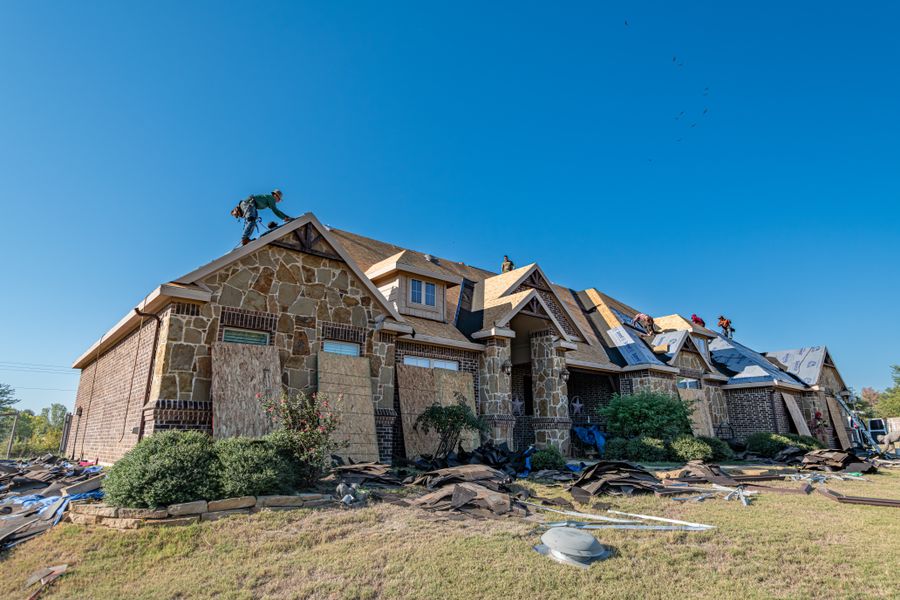
Tenants report leaks; owners schedule fixes. Leak season for the half of Berkeley that rents.
Roofing for Berkeley’s Landlords →
Wind, uplift, and limb strikes: the storm call itself, handled the two-act way.
Storm Damage Roof Repair in Berkeley →Call us, and we will find the entry point, dry the house in, and put the permanent scope in writing while the rain is still falling — then come back in the dry window and finish it properly. That is the whole method: two acts, one contract, no surprises in Act Two.